
Subtotal $0.00
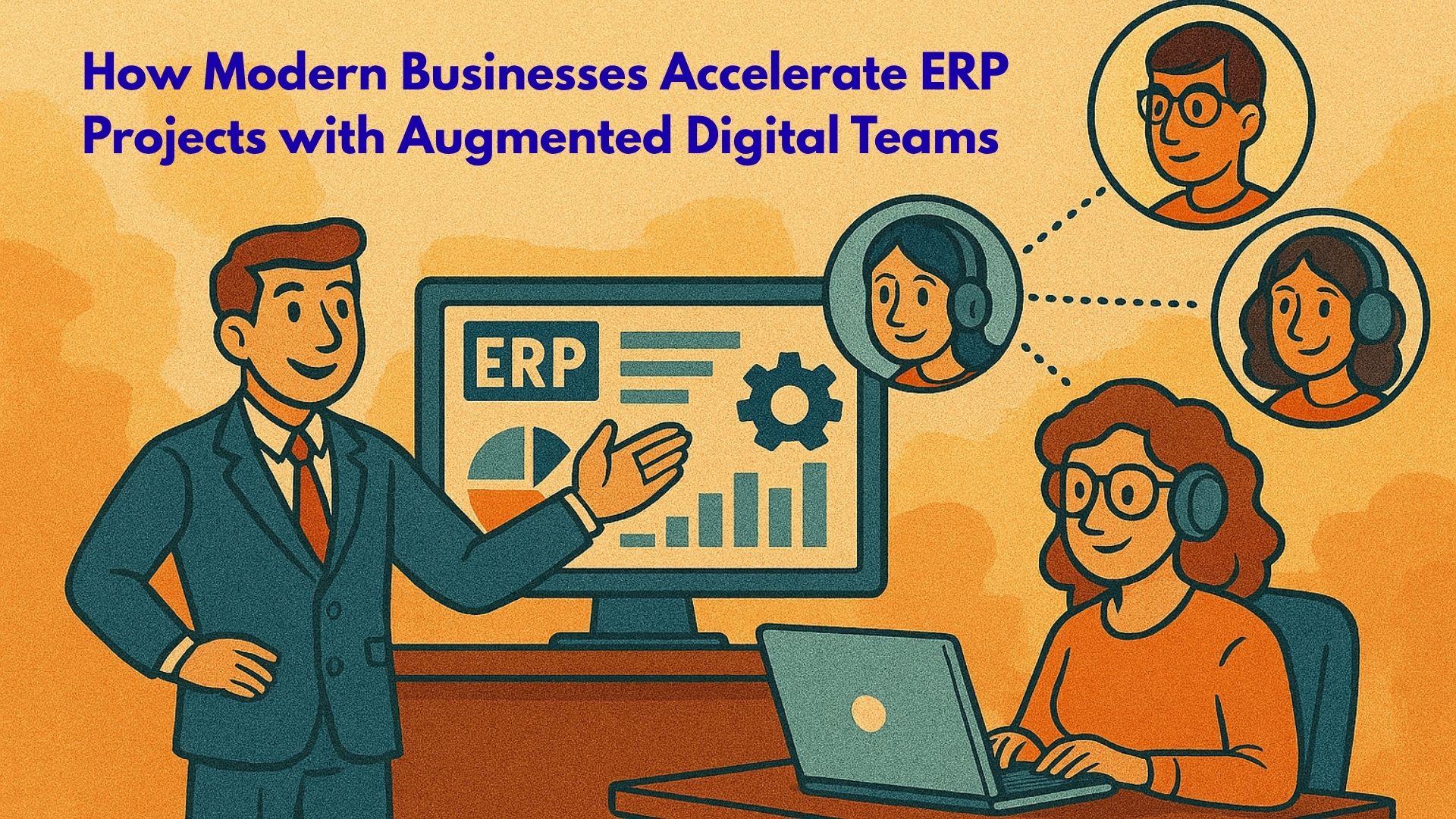
In today’s fast-changing digital economy, businesses are under constant pressure to modernize operations, improve productivity, and respond quickly to market demands. ERP systems have become the foundation of this transformation by helping organizations manage finance, operations, inventory, customer relationships, supply chains, and reporting within a unified platform. However, ERP implementation projects are often large, complex, and time-consuming, making them difficult to complete without the right expertise and resources.
To overcome these challenges, many organizations are now turning to augmented digital teams to accelerate ERP deployments and improve project outcomes. This strategy allows businesses to work with experienced external professionals who support internal teams throughout implementation, migration, customization, integration, and support activities. Companies implementing Microsoft Dynamics 365 Business Central are increasingly using this model to speed up digital transformation while maintaining flexibility and cost control.
Working with a trusted Microsoft Dynamics 365 partner gives businesses access to specialized ERP knowledge, industry expertise, and scalable technical resources that can dramatically reduce implementation timelines and improve efficiency.
Understanding Augmented Digital Teams
Augmented digital teams are external technology experts who collaborate with internal business teams to support ERP projects. Unlike traditional outsourcing, this model allows businesses to retain complete project visibility and operational control while gaining access to additional expertise and workforce capacity.
These teams may include ERP consultants, developers, data migration specialists, integration experts, support engineers, and cloud professionals. Businesses using Microsoft Dynamics consulting services often rely on augmented teams to handle specialized technical tasks that internal staff may not have the experience or bandwidth to manage effectively.
As ERP projects continue to become more advanced with AI, automation, and cloud technologies, digital team augmentation provides businesses with a practical and scalable way to complete projects faster without compromising quality.
Why ERP Projects Commonly Experience Delays
ERP implementations involve multiple business departments, technical systems, operational workflows, and large volumes of data. Because of this complexity, projects frequently face delays due to resource shortages, technical limitations, and changing business requirements.
Many internal IT teams already manage daily operational responsibilities, leaving limited time for large-scale ERP implementation work. At the same time, modern ERP platforms such as Microsoft Dynamics 365 Business Central require specialized technical and functional expertise that may not exist within the organization.
Data migration is another major challenge. Businesses often need to transfer years of operational and financial data from legacy systems into new cloud-based environments. If data is incomplete, duplicated, or poorly structured, migration timelines can increase significantly.
Integration complexity also contributes to project delays. Modern ERP systems must connect with CRM software, logistics tools, HR platforms, eCommerce systems, and third-party applications. Without experienced integration specialists, businesses may encounter operational disruptions and compatibility issues.
This is one of the primary reasons organizations prefer working with Microsoft Dynamics partners that have proven implementation experience and structured delivery methodologies.
How Augmented Digital Teams Accelerate ERP Projects
One of the biggest advantages of augmented digital teams is immediate access to skilled ERP professionals. Instead of spending months recruiting internal employees, businesses can quickly onboard experienced consultants and developers who are ready to begin project execution.
This approach significantly reduces implementation delays and improves project momentum. A reliable Microsoft Dynamics 365 partner can provide experts in ERP deployment, cloud migration, AI integration, workflow automation, and analytics, allowing businesses to move forward much faster than relying solely on internal teams.
Another major advantage is scalability. ERP projects require different skill sets at different stages. During migration phases, businesses may need additional data specialists, while development phases may require more technical consultants. Augmented digital teams allow organizations to scale resources based on project demands, improving both efficiency and budget management.
For businesses using MS Dynamics 365 implementation services, this flexibility is extremely valuable because it helps maintain delivery speed while reducing unnecessary staffing costs.
Accelerating Cloud ERP Migration
Many businesses are replacing outdated legacy systems with cloud ERP platforms to improve operational visibility, scalability, and automation capabilities. However, cloud migration projects can be technically demanding and risky without the right expertise.
D365 migration services supported by augmented digital teams help organizations move data, processes, and workflows into modern ERP environments with minimal disruption. Experienced migration specialists can identify potential risks early, clean legacy data, and optimize migration strategies to reduce downtime.
Cloud ERP migration also provides businesses with improved security, automatic updates, remote accessibility, and real-time reporting capabilities. By partnering with experienced Microsoft Dynamics consulting services providers, organizations can ensure smoother migration processes and faster user adoption.
The Growing Importance of Microsoft Dynamics 365 Business Central
Microsoft Dynamics 365 Business Central has become one of the most popular ERP solutions for growing businesses because of its flexibility, cloud-based architecture, and strong integration capabilities. It helps organizations centralize operations while improving productivity and decision-making.
The platform supports finance management, supply chain operations, inventory control, project management, customer service, and reporting within a single environment. Because it integrates seamlessly with Microsoft tools such as Outlook, Teams, Power BI, and Azure, businesses can create a more connected and collaborative digital workplace.
Modern organizations are also using Business Central to automate repetitive tasks and gain AI-powered insights that improve operational efficiency. Working with an experienced Microsoft Dynamics 365 partner ensures businesses can fully customize the platform according to their industry and operational requirements.
How Augmented Teams Improve ERP Customization
Every business operates differently, which means ERP customization is often necessary to align workflows, reporting structures, and operational processes with organizational goals.
Augmented digital teams provide businesses with developers and consultants who can build custom workflows, dashboards, integrations, and automation tools quickly and efficiently. Instead of delaying implementation while searching for permanent employees, businesses can immediately access professionals with specialized ERP development expertise.
This not only speeds up deployment but also ensures that the ERP platform supports future scalability and digital innovation.
Cost Efficiency and Resource Optimization
Hiring permanent ERP professionals can be expensive and time-consuming, especially for short-term or project-based needs. Businesses must invest in recruitment, onboarding, salaries, training, and long-term workforce management.
Digital team augmentation provides a more flexible and cost-effective alternative. Companies only pay for the expertise they require during specific implementation phases, helping reduce operational overhead while improving project efficiency.
Some key benefits include:
- Faster access to ERP specialists
- Reduced recruitment costs
- Improved project scalability
Organizations using Microsoft Dynamics 365 Support Services also benefit from long-term operational improvements because external experts continuously monitor system performance, optimize workflows, and resolve technical issues proactively.
The Role of AI and Automation in ERP Acceleration
Modern ERP projects are increasingly driven by AI-powered automation and intelligent analytics. Businesses are adopting technologies that reduce manual work, improve forecasting accuracy, and enhance operational visibility.
Augmented digital teams help businesses integrate advanced AI capabilities into Microsoft Dynamics 365 Business Central environments. These technologies support automated reporting, predictive inventory planning, intelligent financial analysis, and workflow automation.
As businesses continue investing in digital transformation, AI-powered ERP systems will become even more important for improving productivity and reducing operational inefficiencies.
Why Ongoing ERP Support Matters
ERP implementation is not a one-time project. Businesses require continuous optimization, updates, maintenance, and support to ensure long-term success.
Microsoft Dynamics 365 Support Services help organizations maintain stable system performance while improving security, operational efficiency, and user adoption. Support teams also help businesses implement new features, troubleshoot technical issues, and optimize workflows as business needs evolve.
Without proper support, ERP systems may experience performance issues, downtime, or reduced user productivity over time. This is why many organizations partner with Microsoft Dynamics partners that provide long-term managed support services.
Industry Applications of ERP Team Augmentation
Businesses across multiple industries are using augmented digital teams to accelerate ERP modernization initiatives.
Manufacturing companies use ERP solutions to automate production planning, inventory management, procurement, and quality control processes. Retail businesses rely on ERP systems to improve omnichannel operations, customer experiences, and supply chain visibility.
Logistics organizations use cloud ERP platforms for shipment tracking, warehouse management, route optimization, and forecasting. Healthcare providers improve compliance, procurement, and financial management using modern ERP technologies.
Professional service organizations also benefit from ERP systems by streamlining project management, billing automation, and resource planning activities.
Best Practices for Successful ERP Project Execution
Businesses should follow a strategic approach when implementing ERP systems with augmented digital teams. Selecting an experienced Microsoft Dynamics 365 partner is critical because the right implementation partner can significantly impact project success.
Organizations should also define clear goals, timelines, and performance expectations before starting the implementation process. Strong communication between internal stakeholders and external consultants helps reduce misunderstandings and ensures alignment throughout the project lifecycle.
Employee training and change management are equally important because successful ERP adoption depends heavily on user engagement and operational readiness.
Some important project priorities include:
- Clear communication and collaboration
- Strong data migration planning
- Continuous user training and support
By following these best practices, businesses can reduce implementation risks and achieve faster ERP success.
The Future of ERP Projects with Digital Workforce Expansion
The future of ERP implementation will continue evolving as businesses adopt AI, cloud technologies, automation, and data-driven decision-making. Organizations are increasingly moving toward agile delivery models that combine internal expertise with augmented digital teams.
Future ERP environments will likely include advanced AI copilots, predictive analytics, intelligent automation, and low-code development platforms that improve operational efficiency and reduce manual workloads.
Businesses that embrace augmented digital teams today will be better positioned to adapt to changing market conditions, accelerate innovation, and achieve long-term digital transformation goals.
Conclusion
Modern ERP projects require speed, flexibility, technical expertise, and strong execution strategies. Traditional implementation approaches often struggle to meet growing business demands, especially as ERP systems become more advanced and integrated with AI-powered technologies.
By leveraging augmented digital teams, organizations can accelerate ERP implementations, reduce operational risks, improve scalability, and optimize project costs. Businesses implementing Microsoft Dynamics 365 Business Central benefit significantly from access to experienced consultants, developers, migration experts, and support professionals.
Partnering with a reliable Microsoft Dynamics 365 partner and utilizing professional Microsoft Dynamics consulting services allows businesses to complete ERP projects faster while improving long-term operational performance.
As digital transformation continues reshaping industries worldwide, augmented digital teams will remain essential for helping organizations successfully deploy, manage, and optimize modern ERP solutions.
FAQs
Q1. What are augmented digital teams in ERP projects?
Ans: Augmented digital teams are external ERP experts who work alongside internal employees to support implementation, migration, customization, development, and support activities.
Q2. Why is Microsoft Dynamics 365 Business Central popular?
Ans: Microsoft Dynamics 365 Business Central is popular because it offers cloud-based ERP functionality, automation, scalability, AI capabilities, and seamless Microsoft integration.
Q3. How do augmented teams reduce ERP implementation timelines?
Ans: They provide immediate access to experienced ERP consultants and technical specialists who can accelerate development, migration, integration, and deployment activities.
Q4. What are D365 migration services?
D365 migration services help businesses move from legacy systems to Microsoft Dynamics 365 platforms while minimizing downtime and protecting data integrity.
Q5. Why are Microsoft Dynamics 365 Support Services important?
Ans: These services help businesses maintain system performance, resolve technical issues, improve security, and optimize ERP workflows after implementation.
Q6. How do Microsoft Dynamics partners help businesses?
Ans: Microsoft Dynamics partners provide certified expertise, implementation experience, consulting, migration support, and long-term ERP optimization services.
Comments are closed