
Subtotal $0.00
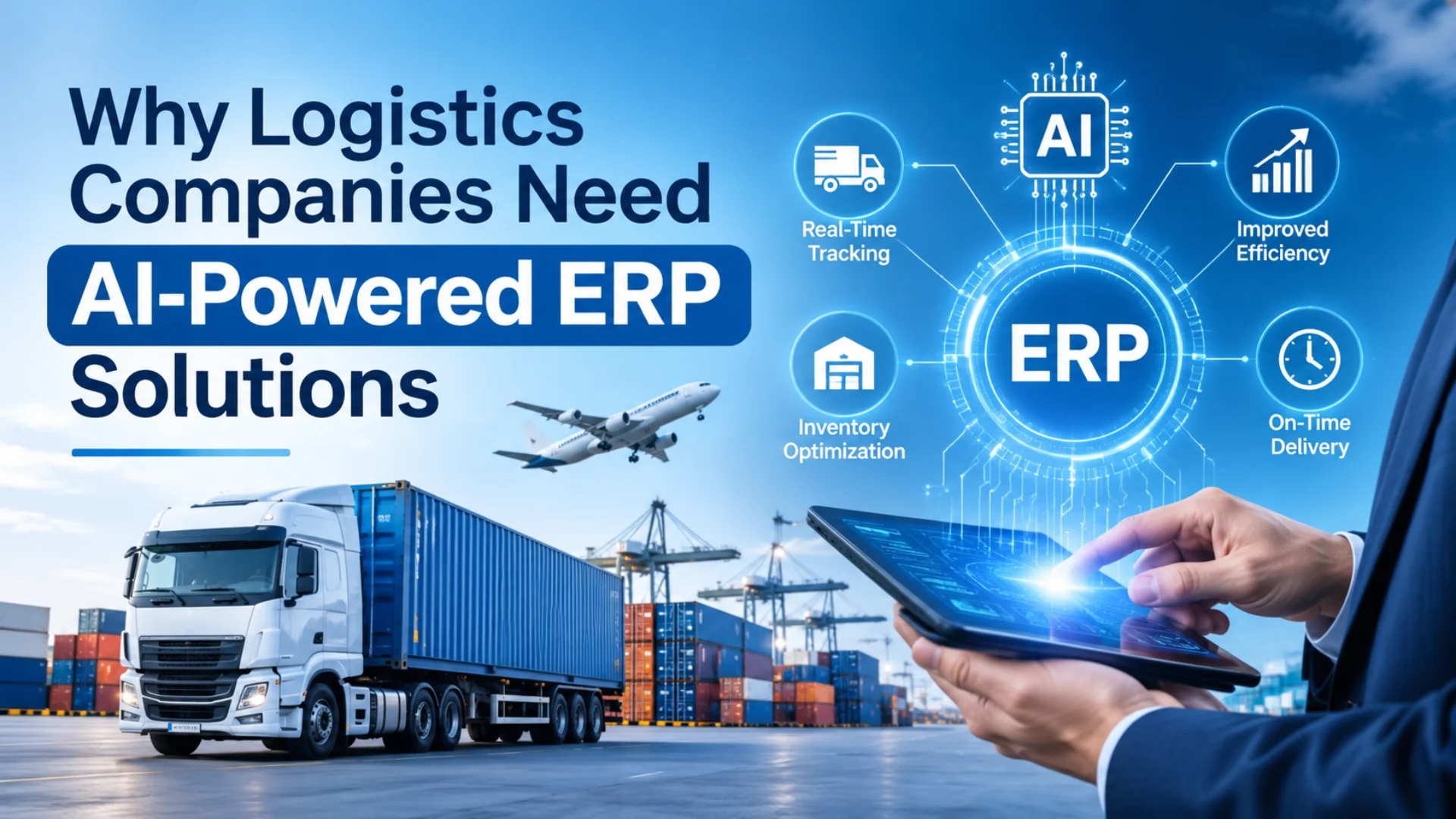
Short answer: Logistics companies need AI-powered ERP because it joins transport, warehouse, inventory, and finance data in one system, then uses machine learning to forecast demand, plan routes, and flag exceptions before they cost money. McKinsey-reported results include 20–50% lower forecast errors and up to 15% lower logistics costs (DataRobot, Inzonex). For UK operators facing skills gaps, rising costs, and aging systems, it is fast becoming the operating backbone, not an optional upgrade.
What is an AI-powered ERP for logistics?
An AI-powered ERP for logistics is an enterprise resource planning system with machine learning built into its core workflows: forecasting, routing, inventory, billing, and exception handling. Instead of only recording what happened, it predicts what will happen and recommends or triggers the next action.
Core capabilities include:
- Demand and capacity forecasting from order history, seasonality and external signals
- Inventory and safety-stock optimisation across warehouses and depots
- Route and load planning that responds to delays and cost changes
- Automated documents and invoicing with fewer manual entries
- Exception alerts that surface late shipments, stock-outs, and margin leaks early
Industry commentary in 2026 describes logistics ERP shifting from dashboards and assistants towards agentic AI that can resolve exceptions and propose replans, with people setting the guardrails (Intech Group, a vendor blog).
Why do logistics companies need AI-powered ERP?
Logistics companies need AI-powered ERP for six reasons: better forecasting, lower cost, real-time visibility, a stretched workforce, fragmented legacy systems, and rising cyber and compliance risk.
- Forecasts get far more accurate. McKinsey research, as reported by the Inzonex 2026 industry report, finds AI can cut supply-chain forecast errors by 20–50%, which in turn can reduce lost sales from unavailable stock by up to 65% (Inzonex).
- Logistics costs fall. Widely cited McKinsey figures put early adopters at roughly 15% lower logistics costs, 35% lower inventory, and 65% higher service levels (DataRobot, DBS). McKinsey’s narrower distribution-operations estimate is more conservative: 5–20% lower logistics costs and 20–30% lower inventory (Inbound Logistics). Expect results to vary with data quality and scale.
- Visibility becomes real-time. AI layered on unified ERP data can predict delays, suggest carriers, recommend route sequences, and trigger replanning when disruption hits (SysGenPro, a vendor blog).
- Skills gaps are widening. In March 2026, 975,553 people in the UK held a full Category C or C+E license, but only 586,596 also held a valid Driver CPC, about 60% (reported by Trans.info, citing Logistics UK). Logistics UK also notes automation is reshaping jobs rather than simply removing them. Automating planning and admin frees scarce staff for higher-value work; TIMOCOM likewise points to AI as a way to ease staffing and admin pressure (TIMOCOM).
- Legacy systems hold operators back. A 2024 survey of 89 UK logistics companies found 37% cite outdated systems as a barrier to digital processes, and 63% report a digital skills shortage (Technology Reseller, reporting the Neos Networks study).
- Cyber and fraud risk is rising. TIMOCOM highlights phishing, identity theft, and “phantom hauliers” as growing threats in the UK market, making secure, centralised, auditable systems a competitive factor (TIMOCOM).
How does AI-powered ERP differ from traditional ERP?
Traditional ERP records transactions; AI-powered ERP learns from them and acts on what it finds.
| Area | Traditional ERP | AI-powered ERP |
|---|---|---|
| Forecasting | Static reports and spreadsheets | Machine-learning demand and capacity forecasts |
| Inventory | Fixed reorder points | Dynamic stock levels by location and season |
| Routing | Manual or separate TMS tools | Planning tied to live orders, cost and delays |
| Exceptions | Found after the fact | Flagged early, with suggested actions |
| Reporting | Scheduled, analyst-built | Natural-language and on-demand analytics |
| Data needed | Clean transactions | Clean, connected data across WMS, TMS and ERP |
Why do AI-powered ERP projects fail, and how can you avoid it?
Most failures come from weak data and poor scoping, not from the AI. The same 2024 UK survey found digital initiatives failed at over four in five logistics companies in the previous year (Technology Reseller). Industry analysts add that AI value depends on usable, connected logistics data (Intech Group) and that rolling out forecasting, automation, and conversational analytics all at once can slow stabilisation (SysGenPro).
A five-step approach:
- Audit your data. Unify customer, carrier, SKU, and location IDs across ERP, WMS, and TMS.
- Pick one high-value use case first, such as demand forecasting or route planning.
- Set a baseline for cost per shipment, on-time delivery, and inventory days before go-live.
- Phase the rollout, then add automation once users trust the outputs.
- Keep people in control with clear guardrails for AI-triggered actions.
How can Trident Info UK help logistics companies?
Trident Info UK is a Microsoft Solutions Partner that implements and supports Microsoft Dynamics 365, with a listed specialisation in Dynamics 365 Business Central and logistics among the industries it serves (ERP Research). Partner directories describe more than 26 years of ERP experience, 200+ consultants, and 250+ customers across five countries (Top Dynamics Partners).
For logistics teams, that means help with:
- Assessing your current ERP, WMS, and TMS data and integration gaps
- Implementing and migrating to Dynamics 365
- Prioritising and phasing AI-enabled use cases with measurable targets
- Ongoing support, custom development, and reporting
Next step: Book an ERP readiness conversation with Trident Info UK.
FAQs
Q1. What is an AI-powered ERP for logistics?
Ans: It is an ERP system that uses machine learning to forecast demand, optimise inventory and routes, automate documents and flag exceptions across transport, warehousing, and finance, rather than only recording transactions.
Q2. Why do logistics companies need AI-powered ERP?
Ans: Because it unifies data, improves forecasts, and cuts waste. McKinsey research cited by industry sources reports 20–50% lower forecast errors and logistics cost reductions of 5–20% or more, depending on scale and data quality.
Q3. How much can AI-powered ERP reduce logistics costs?
Ans: Sources vary. McKinsey figures reported by DataRobot cite about 15% lower logistics costs; a narrower distribution estimate reported by Inbound Logistics is 5–20%. Your result depends on data quality, scope, and adoption.
Q4. Is AI-powered ERP only for large logistics firms?
Ans: No. Cloud ERP and phased rollouts let mid-sized hauliers, 3PLs, and distributors start with one use case, such as forecasting, and expand as results are proven.
Q5. What is the biggest risk when adopting it?
Ans: Poor data. A 2024 UK survey reported digital projects failing at over four in five logistics firms, so clean, connected data and a phased plan matter more than the tool itself.
Q6. Can AI-powered ERP help with the UK driver and skills shortage?
Ans: It can reduce the admin and planning workload, so existing staff cover more. It does not replace drivers; Logistics UK says automation is reshaping roles rather than simply removing them.
Q7. Which ERP partner can implement this in the UK?
Ans: Trident Info UK is a Microsoft Solutions Partner specialising in Dynamics 365 Business Central implementation, migration, and support for UK businesses, including logistics.
Comments are closed