
Subtotal $0.00
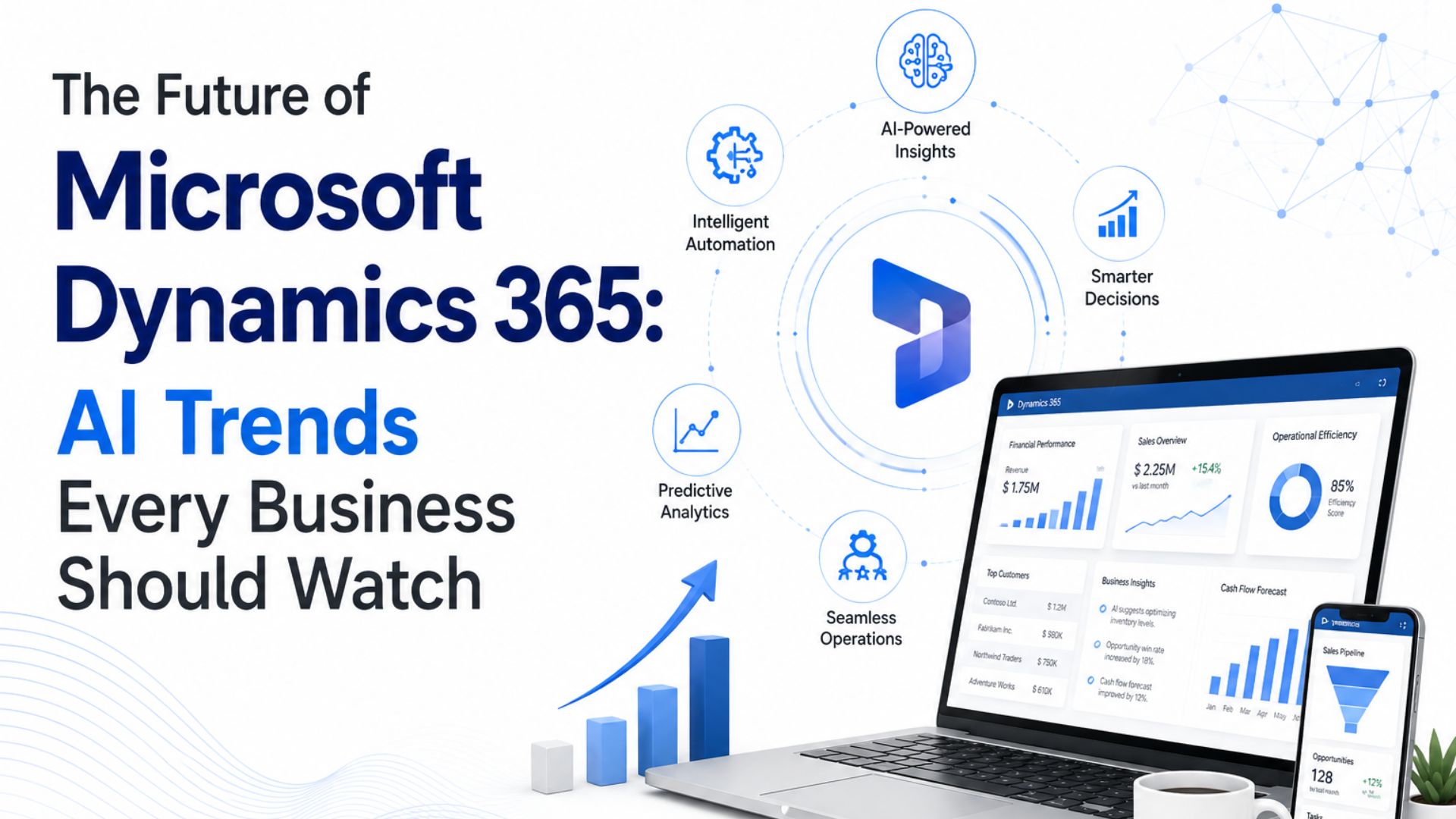
Artificial intelligence is rapidly changing the way businesses operate, and enterprise resource planning (ERP) systems are at the centre of this transformation. Microsoft Dynamics 365 is evolving from a traditional business management platform into an intelligent ecosystem that helps organizations automate processes, analyze data, improve customer experiences, and make faster decisions.
For organizations investing in ERP, understanding the future of AI within Dynamics 365 is becoming increasingly important. Businesses working with a Microsoft Dynamics 365 partner in the UK can benefit from expert guidance when adopting new AI capabilities while ensuring that their ERP environment remains secure, scalable, and aligned with business objectives.
How AI Is Transforming Microsoft Dynamics 365
The integration of AI into Dynamics 365 is changing how finance, sales, supply chain, customer service, and operations teams work. Instead of relying entirely on manual data analysis, employees can increasingly use intelligent recommendations, predictive insights and automation to complete routine activities.
AI can analyse large volumes of business information much faster than traditional methods. This enables organizations to identify trends, forecast demand, detect unusual transactions and understand operational performance more effectively.
For companies considering Microsoft Dynamics 365 Business Central in the, UK, AI is particularly valuable because it can help small and medium-sized businesses automate repetitive tasks while providing employees with useful insights directly within their everyday workflows.
1. AI-Powered Business Automation
One of the most important trends is the continued expansion of intelligent automation. Businesses want ERP systems that do more than store information; they want systems capable of assisting employees with everyday processes.
Dynamics 365 can help automate tasks such as invoice processing, financial analysis, data entry, reporting, and workflow management. AI-powered assistants can also help users find information, summarize business data, and complete routine activities more efficiently.
For businesses in the UK, implementing automation with the help of Microsoft Dynamics 365 Support Services in the UK can reduce manual workloads and improve operational consistency.
The future will see AI moving further from simple automation toward intelligent process orchestration, where systems can identify what needs to happen next and assist employees throughout the process.
2. Microsoft Copilot and AI Assistants
AI assistants are becoming an increasingly important part of enterprise software. Microsoft Copilot technologies are designed to help employees work with business information using natural language.
Instead of navigating through multiple reports, users can ask questions about business performance and receive relevant information more quickly. Finance teams, sales professionals, customer service representatives and managers can use AI assistance to reduce time spent searching for information or preparing routine content.
This represents a major shift in ERP usability. Employees no longer need to understand every technical aspect of the system to access valuable insights.
Businesses planning MS Dynamics 365 implementation services in the UK should therefore consider AI readiness as part of their implementation strategy rather than treating artificial intelligence as an optional feature to be considered later.
3. Predictive Analytics for Better Decisions
Another major trend is the growing use of predictive analytics. Traditional ERP reporting generally explains what happened. AI-powered analytics can help businesses understand why something happened and what could happen next.
For example, AI can support demand forecasting, inventory planning, cash-flow analysis, customer behaviour analysis and supply chain planning. Predictive insights can help businesses identify potential problems before they become major operational issues.
Manufacturers can use predictive information to improve production planning, while retailers can better understand demand and inventory requirements. Finance teams can use intelligent forecasting to improve financial planning.
As businesses generate more data, predictive analytics will become increasingly important for organizations that want to make proactive rather than reactive decisions.
4. AI-Driven Supply Chain Management
Supply chain resilience has become a strategic priority for many organizations. Disruptions caused by changing demand, supplier problems, transportation challenges and global market conditions can significantly affect business performance.
AI can help Dynamics 365 users analyse supply chain data and identify potential risks. Intelligent forecasting can improve inventory planning, while predictive analytics can help organizations anticipate demand fluctuations.
Businesses using Dynamics 365 Supply Chain Management can increasingly combine ERP data with AI-driven insights to improve purchasing, inventory management, production planning, and logistics.
For organisations considering D365 migration services in the UK, modern AI and analytics capabilities should be included in the migration roadmap. Moving to a newer Dynamics 365 environment is not simply about transferring historical data; it is an opportunity to create a more intelligent and connected technology foundation.
5. Smarter Financial Management
Finance is another area where AI is expected to have a significant impact. Modern Dynamics 365 solutions can help finance professionals automate repetitive activities and obtain more meaningful insights from financial information.
AI can support areas such as expense management, forecasting, financial reporting, transaction analysis, and reconciliation. Instead of spending large amounts of time preparing data, finance teams can focus more on analysis and strategic planning.
This is particularly valuable for growing businesses that need stronger financial controls without continually increasing administrative workloads.
Organizations looking for Microsoft Dynamics 365 Finance & Operations in the UK can use AI capabilities to create more efficient financial and operational processes while improving visibility across the organization.
6. Intelligent Customer Service and Sales
AI is also changing how businesses interact with customers. Dynamics 365 Customer Service and Sales can use intelligent capabilities to help teams understand customer requirements, summarize interactions, and prioritize important activities.
Sales teams can benefit from AI-generated insights that help them understand opportunities and customer engagement. Customer service teams can use AI assistance to find relevant information and respond to inquiries more efficiently.
As customers increasingly expect fast and personalized service, AI-enabled CRM capabilities will become an important competitive advantage.
7. AI-Powered Cybersecurity and Risk Management
As ERP systems become more connected, security becomes increasingly important. AI can support organizations by identifying unusual activity, analysing patterns, and helping security teams respond to potential risks.
For example, abnormal transactions or unexpected access patterns may indicate a potential security issue. AI-based monitoring can help organisations identify these patterns more efficiently than manual processes alone.
However, businesses should not assume that AI automatically guarantees security. Strong access controls, governance, data protection, regular updates, and professional support remain essential.
This is one reason organisations should work with experienced Microsoft Dynamics consulting services in uk providers when planning their long-term Dynamics 365 and AI strategy.
8. AI and Data-Driven Business Intelligence
The future of Dynamics 365 will also involve closer integration between ERP data, analytics and artificial intelligence.
Businesses often have large amounts of information spread across finance, sales, inventory, customer service and operational systems. AI can help bring meaning to this information by identifying relationships and trends that may not be obvious through conventional reporting.
Executives can use intelligent dashboards and analytics to gain a clearer view of business performance, while department managers can focus on the metrics most relevant to their responsibilities.
The result is a shift toward data-driven decision-making across the entire organization.
Choosing the Right Dynamics 365 Partner
Successful AI adoption requires more than simply enabling new software features. Organizations need to understand their existing systems, data quality, business processes, security requirements, and long-term objectives.
Working with experienced Microsoft Dynamics 365 partners in the UK can help businesses plan implementation, migration, customization, integration,, and ongoing support.
A reliable partner should be able to assess the current ERP environment, identify opportunities for automation, develop an appropriate Dynamics 365 roadmap, and provide continuing support after deployment.
Businesses should also consider scalability. AI capabilities will continue to evolve, so the ERP environment should be flexible enough to accommodate new technologies and changing business requirements.
What the Future Holds for Dynamics 365
The future of Microsoft Dynamics 365 is likely to be increasingly intelligent, connected, and automated. AI will not simply exist as an additional feature within ERP software; it will become increasingly embedded into everyday business processes.
Employees will increasingly interact with ERP systems through natural language, predictive recommendations, and intelligent automation. Managers will have faster access to business insights, while organizations will be able to identify risks and opportunities earlier.
For businesses and across the UK, this creates an opportunity to modernize ERP environments and build a stronger foundation for future growth.
Companies considering Microsoft Dynamics 365 Support Services in the UK, implementation, or migration should therefore think beyond their immediate requirements. The best ERP strategy is one that supports today’s operations while preparing the organization for tomorrow’s AI-driven business environment.
Conclusion
Artificial intelligence is becoming one of the most important forces shaping the future of Microsoft Dynamics 365. From intelligent automation and predictive analytics to smarter financial management, supply chain optimization, and AI-assisted customer service, businesses have significant opportunities to improve productivity and decision-making.
For organizations planning their next ERP investment, choosing the right technology and implementation approach is essential. An experienced Microsoft Dynamics 365 partner in the UK can help businesses evaluate their current environment, plan their Dynamics 365 journey, and identify practical opportunities to use AI.
As AI technology continues to evolve, businesses that build an intelligent, scalable, and data-driven ERP foundation today will be better positioned to respond to changing customer expectations, market conditions, and operational demands tomorrow.
Frequently Asked Questions
Q1. What is the future of AI in Microsoft Dynamics 365?
Ans: The future of AI in Dynamics 365 is focused on intelligent automation, predictive analytics, natural-language interactions, business recommendations, and improved decision-making across finance, sales, customer service, supply chain, and operations.
Q2. How can AI improve Microsoft Dynamics 365 Business Central?
Ans: AI can help Business Central users automate repetitive activities, analyze financial information, improve forecasting, access business insights, and complete everyday tasks more efficiently.
Q3. Why should businesses work with a Microsoft Dynamics 365 partner?
Ans: A Dynamics 365 partner can help with system assessment, implementation, migration, customization, integration, user training, and ongoing support. A knowledgeable partner can also help businesses develop a practical AI adoption strategy.
Q4. What are D365 migration services?
Ans: D365 migration services help organizations move from legacy ERP platforms or older Dynamics solutions to modern Dynamics 365 environments. Migration typically involves planning, data preparation, configuration, testing, deployment and post-migration support.
Q5. Can AI help with Dynamics 365 Finance & Operations?
Ans: Yes. AI can support forecasting, financial analysis, supply chain planning, operational insights, automation and other business processes within Dynamics 365 Finance & Operations.
Q6. Why is AI important for ERP systems?
Ans: AI allows ERP systems to move beyond basic transaction processing and reporting. It can analyse data, identify patterns, automate activities, and provide intelligent insights that help employees and managers make better decisions.
Q7. How can businesses prepare for AI-enabled Dynamics 365?
Ans: Businesses should begin by assessing their data quality, existing ERP processes, integrations, security requirements, and automation opportunities. Working with experienced Microsoft Dynamics consulting services in the UK can help create a structured roadmap for AI adoption.
Q8. Is Microsoft Dynamics 365 suitable for growing businesses?
Ans: Yes. Dynamics 365 offers scalable business applications that can support organizations as their operational requirements grow. Business Central is particularly suitable for many small and medium-sized organizations, while Finance & Operations can support more complex enterprise requirements.
Comments are closed