
Subtotal $0.00
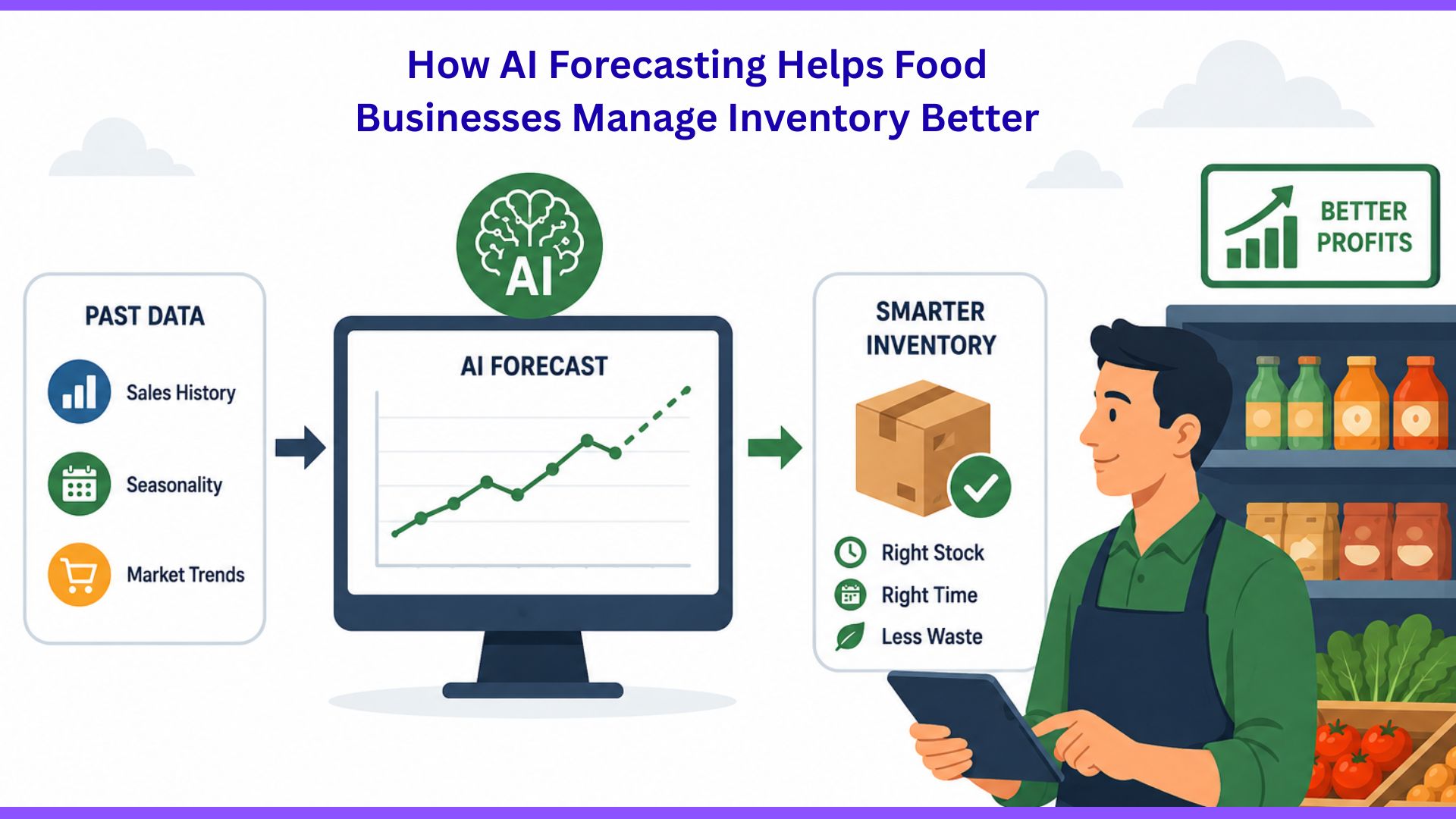
The food industry operates in one of the most demanding business environments. From managing perishable products and fluctuating customer demand to handling supply chain disruptions and rising operational costs, food businesses face numerous challenges every day. Inventory management sits at the center of these challenges because maintaining the right stock levels directly affects profitability, customer satisfaction, and business growth. Having too much inventory can result in spoilage and unnecessary storage expenses, while insufficient inventory can lead to stockouts, lost sales, and unhappy customers.
As consumer preferences continue to evolve and market conditions become more unpredictable, traditional inventory planning methods are no longer sufficient. Businesses that rely solely on historical sales data and manual forecasting often struggle to keep pace with changing demand patterns. This is where artificial intelligence (AI) forecasting is transforming inventory management. By analyzing vast amounts of data and identifying patterns that humans may overlook, AI enables food businesses to make smarter inventory decisions and improve operational efficiency.
Organizations that adopt modern ERP platforms such as Microsoft Dynamics 365 Business Central are increasingly using AI-powered forecasting capabilities to gain greater control over their inventory operations. Working with an experienced Microsoft Dynamics 365 partner helps businesses leverage these technologies effectively and achieve measurable results.
Understanding AI Forecasting in Food Inventory Management
AI forecasting is the process of using machine learning algorithms, predictive analytics, and real-time data analysis to estimate future product demand. Unlike traditional forecasting methods that focus primarily on historical sales figures, AI considers multiple variables simultaneously. This allows businesses to generate far more accurate predictions and respond quickly to changing market conditions.
For food businesses, AI forecasting can evaluate purchasing patterns, seasonal demand changes, local events, weather conditions, supplier performance, and customer behavior. By continuously learning from incoming data, AI models improve over time and provide increasingly reliable forecasts. This ability to adapt makes AI forecasting particularly valuable in the food industry, where demand can change rapidly.
Inventory planning has traditionally involved significant guesswork. Managers often depend on experience and intuition when deciding how much stock to order. While experience remains valuable, AI introduces a level of precision that significantly reduces uncertainty. Businesses can make inventory decisions based on data-driven insights rather than assumptions.
Why Inventory Management Is Critical in the Food Industry
Inventory management plays a unique role in food businesses because many products have limited shelf lives. Unlike durable goods, food products can spoil quickly if inventory levels are not properly controlled. This creates additional pressure for organizations to maintain the right balance between product availability and waste reduction.
Common inventory challenges faced by food businesses include:
- Product spoilage and food waste
- Seasonal demand fluctuations
- Supply chain disruptions
- Overstocking and understocking
- Rising storage and handling costs
These challenges can have a direct impact on profitability. Even small forecasting errors can result in significant financial losses when multiplied across hundreds or thousands of products. As competition in the food industry intensifies, businesses need more sophisticated tools to maintain efficient inventory operations.
The Role of AI in Demand Forecasting
Demand forecasting is one of the most important applications of AI in food inventory management. Accurate demand predictions enable businesses to purchase, produce, and distribute products more efficiently. AI forecasting systems analyze both historical and real-time data to identify trends and anticipate future demand patterns.
For example, a grocery retailer may notice increased demand for cold beverages during periods of high temperatures. An AI-powered forecasting system can recognize this relationship and automatically adjust future inventory recommendations when similar weather conditions occur. Likewise, a restaurant chain can use AI to anticipate increased demand during holidays, local events, or promotional campaigns.
By improving forecast accuracy, businesses can reduce excess inventory while ensuring products remain available when customers need them. This balance is essential for maximizing revenue and maintaining customer satisfaction.
Reducing Food Waste Through Intelligent Forecasting
Food waste is one of the most significant challenges facing the global food industry. Millions of tons of food are discarded every year due to poor inventory management and inaccurate demand forecasts. Excess inventory often leads to expired products, resulting in financial losses and environmental concerns.
AI forecasting helps businesses address this issue by providing more accurate predictions regarding future demand. Rather than ordering inventory based on rough estimates, businesses can make purchasing decisions based on data-driven forecasts. This allows organizations to stock products in quantities that closely align with expected demand.
The result is a substantial reduction in spoilage and waste. Businesses can improve sustainability initiatives while simultaneously increasing profitability. In many cases, companies that implement AI-powered forecasting systems experience immediate improvements in inventory turnover and waste reduction.
Organizations working with providers of Microsoft Dynamics consulting services often discover that AI forecasting becomes a valuable tool for supporting sustainability goals while improving operational performance.
Improving Supply Chain Visibility
Supply chain efficiency plays a major role in inventory management success. Delayed shipments, supplier shortages, and transportation disruptions can create significant challenges for food businesses. AI forecasting enhances supply chain visibility by identifying potential risks before they impact operations.
Modern forecasting systems can analyze supplier performance data and monitor delivery patterns. If a supplier frequently experiences delays during certain periods, the system can incorporate this information into inventory planning recommendations. Businesses can then take proactive measures to avoid shortages and maintain product availability.
This improved visibility enables organizations to build more resilient supply chains and reduce operational disruptions. Businesses can make better purchasing decisions and maintain stronger relationships with suppliers through data-driven planning.
AI Forecasting and Real-Time Inventory Optimization
One of the greatest advantages of AI forecasting is its ability to support real-time decision-making. Traditional forecasting models are often updated weekly or monthly, making it difficult to respond quickly to sudden market changes. AI-powered systems continuously monitor business data and adjust forecasts accordingly.
When integrated with Microsoft Dynamics 365 Business Central, AI forecasting can provide real-time inventory recommendations based on current sales activity, stock levels, and market conditions. This allows businesses to react immediately to changes in demand and maintain optimal inventory levels.
Real-time optimization reduces the likelihood of stockouts and minimizes the need for emergency purchasing. Businesses can improve operational efficiency while reducing inventory carrying costs.
Enhancing Customer Satisfaction
Inventory management has a direct impact on customer experience. Customers expect products to be available when they need them. Frequent stockouts can erode customer trust and encourage shoppers to shop elsewhere.
AI forecasting helps ensure that popular products remain in stock while minimizing excess inventory. Businesses can meet customer expectations more consistently and provide a better overall shopping experience. Improved product availability also contributes to higher customer retention rates and increased sales.
In today’s competitive marketplace, customer satisfaction is often a key differentiator. Organizations that leverage AI forecasting gain a significant advantage by consistently meeting consumer demand.
The Importance of Microsoft Dynamics 365 Business Central
Many food businesses are investing in Microsoft Dynamics 365 Business Central because it provides a comprehensive platform for inventory, financial, and supply chain management. The solution combines ERP functionality with advanced analytics and automation capabilities, creating a powerful foundation for digital transformation.
Business Central helps organizations centralize data, improve visibility, and automate routine processes. When combined with AI forecasting technologies, businesses gain the ability to make more informed decisions and respond quickly to changing market conditions.
Companies that implement Business Central often experience improvements in inventory accuracy, operational efficiency, and overall business performance. These benefits become even more significant when AI forecasting capabilities are fully integrated into daily operations.
Why Businesses Need Expert Implementation Support
Implementing AI forecasting and ERP technology requires careful planning and expertise. Every organization has unique processes, inventory requirements, and operational challenges. A successful implementation depends on selecting the right technology strategy and ensuring proper system configuration.
Professional MS Dynamics 365 implementation services help businesses deploy ERP solutions effectively and maximize their return on investment. Experienced consultants can identify opportunities for process improvement, customize workflows, and ensure that forecasting tools align with business objectives.
By partnering with knowledgeable implementation specialists, organizations can reduce project risks and accelerate time-to-value.
Supporting Long-Term Success with Microsoft Dynamics 365 Support Services
Technology adoption is not a one-time event. Ongoing optimization and support are essential for maintaining system performance and ensuring continued business success. This is where Microsoft Dynamics 365 support services play a critical role.
Support services help businesses manage software updates, troubleshoot issues, optimize forecasting models, and improve system performance. As business requirements evolve, support teams can recommend enhancements that ensure the ERP environment continues to deliver value.
Organizations that invest in ongoing support are better positioned to maximize the benefits of AI forecasting and maintain a competitive advantage.
Modernizing Legacy Systems Through D365 Migration Services
Many food businesses still rely on outdated ERP systems that lack advanced forecasting capabilities. Legacy technologies often create data silos, limit visibility, and make it difficult to respond quickly to changing market conditions.
By utilizing D365 migration services, organizations can transition to a modern cloud-based ERP environment that supports AI-driven decision-making. Migration projects provide an opportunity to streamline operations, improve data accuracy, and implement advanced forecasting tools.
A modern ERP platform enables businesses to scale more effectively while gaining access to innovative technologies that drive long-term growth.
Key Benefits of AI Forecasting for Food Businesses
The growing adoption of AI forecasting is driven by several measurable business benefits:
- More accurate demand predictions
- Reduced food waste and spoilage
- Improved inventory turnover
- Better customer satisfaction
- Lower operational and storage costs
These advantages contribute directly to increased profitability and improved operational performance. Businesses that embrace AI forecasting are better equipped to navigate market uncertainty and maintain a competitive position.
The Value of Working with Microsoft Dynamics Partners
Technology implementation success often depends on the expertise of the implementation team. Experienced Microsoft Dynamics partners possess deep knowledge of Microsoft technologies and industry best practices.
These professionals help businesses design, implement, and optimize ERP solutions that support long-term objectives. Their expertise ensures that AI forecasting tools are configured correctly and integrated seamlessly with existing business processes.
By partnering with qualified experts, organizations can accelerate digital transformation efforts and achieve stronger business outcomes.
The Future of AI Forecasting in Food Inventory Management
The future of inventory management will be increasingly driven by Artificial Intelligence, machine learning, and predictive analytics. As technology continues to evolve, forecasting systems will become even more accurate and autonomous.
Food businesses will gain access to advanced capabilities such as automated inventory replenishment, predictive procurement, and real-time demand sensing. These innovations will help organizations respond more quickly to market changes and improve overall operational efficiency.
Businesses that invest in AI forecasting today will be better prepared to capitalize on future technological advancements and maintain a leadership position within their industry.
Conclusion
AI forecasting is transforming how food businesses manage inventory. By leveraging advanced analytics and machine learning technologies, organizations can improve demand forecasting accuracy, reduce food waste, optimize inventory levels, and enhance customer satisfaction. As competition continues to increase, businesses must embrace intelligent technologies that support data-driven decision-making.
Solutions such as Microsoft Dynamics 365 Business Central provide the foundation for implementing AI-powered inventory management strategies. With support from a trusted Microsoft Dynamics 365 partner, expert MS Dynamics 365 implementation services, reliable Microsoft Dynamics 365 support services, comprehensive D365 migration services, and experienced Microsoft Dynamics consulting services, food businesses can unlock the full potential of AI forecasting and position themselves for long-term success in an increasingly competitive marketplace.
FAQs
Q1. What is AI forecasting in food inventory management?
Ans: AI forecasting uses machine learning and predictive analytics to predict future product demand and help businesses maintain optimal inventory levels.
Q2. How does AI forecasting reduce food waste?
Ans: AI improves demand prediction accuracy, helping businesses order the right amount of inventory and reducing spoilage caused by overstocking.
Q3. How does Microsoft Dynamics 365 Business Central support inventory management?
Ans: Microsoft Dynamics 365 Business Central provides real-time inventory visibility, forecasting tools, automated replenishment, and integrated supply chain management capabilities.
Q4. Why are MS Dynamics 365 implementation services important?
Ans: Implementation services ensure that ERP systems are configured properly, aligned with business processes, and optimized for long-term success.
Q5. What are the benefits of D365 migration services?
Ans: D365 migration services help businesses move from legacy systems to modern cloud-based ERP platforms that offer improved visibility, scalability, and forecasting capabilities.
Q6. What role do Microsoft Dynamics 365 Support Services play?
Ans: Support services help maintain system performance, provide technical assistance, optimize functionality, and ensure continuous business operations.
Q7. Why should businesses work with a Microsoft Dynamics 365 partner?
Ans: A Microsoft Dynamics 365 partner provides implementation expertise, customization support, training, and strategic guidance throughout the ERP journey.
Q8. What makes Microsoft Dynamics Partners valuable?
Ans: Microsoft Dynamics Partners have proven expertise and experience delivering successful ERP projects, helping businesses maximize their technology investment.
Comments are closed